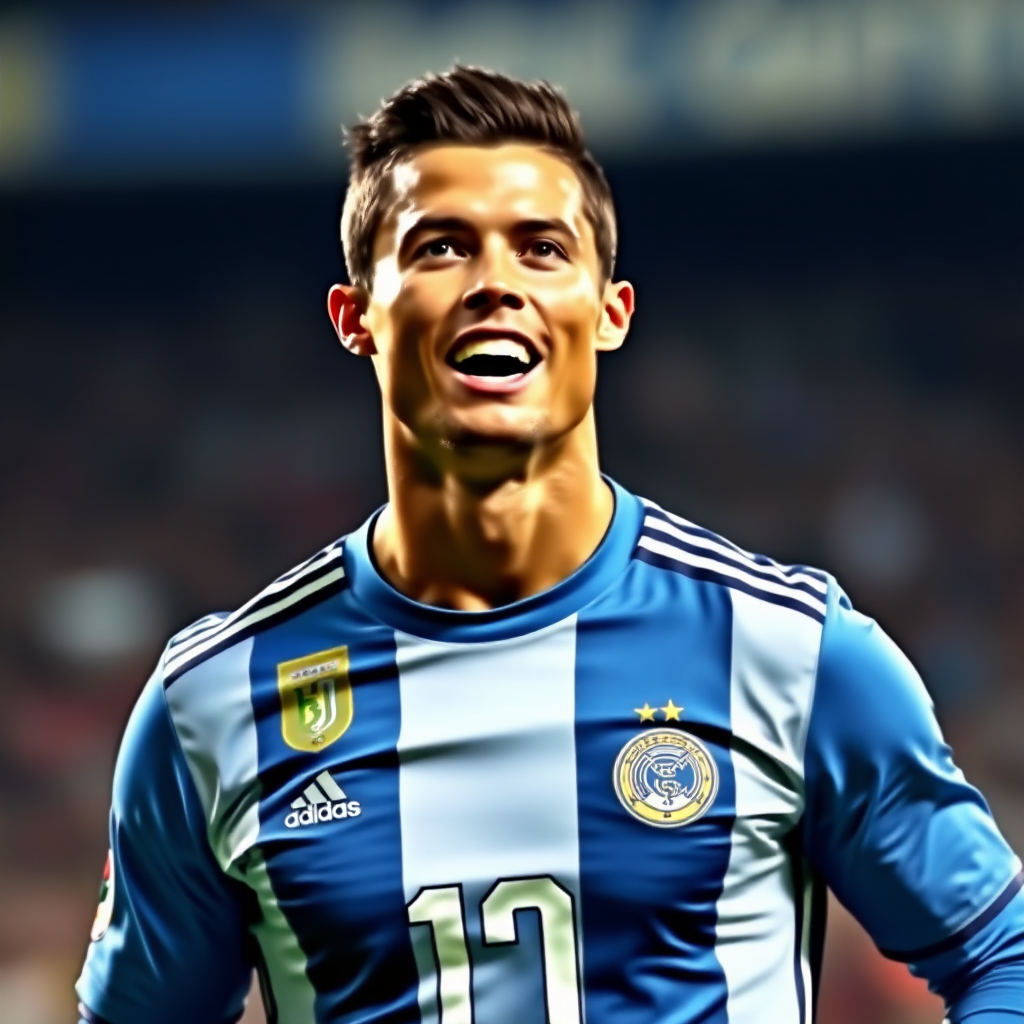
10 Goalscorers to Watch in This Season’s European Competitions
If you need the list now, here it is: Erling Haaland, Harry Kane, Kylian Mbappé, Lautaro Martínez, Viktor Gyökeres, Mohamed Salah, Robert Lewandowski, Ousmane Dembélé, Serhou Guirassy and Raphinha. But a ranked list of ten names only helps if you understand why one player belongs in the first tier and another in the last. European competitions are not a single format, and a scorer who fits a group-stage match badly can become a different animal in a one-legged knockout tie. The entries below are ranked on scoring probability across the competition as a whole, not on reputation, market value or how many times a player appears in highlight reels.
How This List Was Put Together
The ranking is not a copy of a current leaderboard. Club rotations, injuries, new signings and even a change of manager can alter a striker’s role in the space of seven days. Instead, each of the ten names was judged on the qualities that usually decide continental scoring races.
- Confirmed starting status. A brilliant striker who spends the decisive month on the bench is useless for anyone tracking scorer markets.
- Shot location. Players who shoot from central, close-range areas produce more stable scoring numbers than players who rely on long-range screamers.
- Set-piece authority. Penalty takers receive a predictable floor that non-takers simply do not have.
- European matchup profile. Some attackers suffer against low blocks; others only look dangerous when the game opens up. Knockout ties create very different spaces than group games.
- Team ambition. A forward in a side that expects to reach the late rounds is naturally more visible across the full tournament.
No single player is unbeatable. For every name below, the next few paragraphs include the trait that can turn him from a good pick into a frustrating one. When the competition calendar changes, always confirm actual line-ups close to kick-off; the official updates are usually available at https://gg88n2.com/.
 Hình minh hoạ: https://gg88n2.com/
The Ranking: Ten Striker Profiles, One Clear Order
1. Erling Haaland: the penalty-box ceiling
Haaland sits at number one for a simple reason: he tends to receive the ball closer to the goal than almost any other striker in Europe. He does not need ten touches to score; he needs one correct movement, then a short, violent finish. In European competition, where defenders are generally well organised, this is the most difficult skill to defend. His real weakness is not technical but situational. When Manchester City control possession against a deep opponent, Haaland can spend long periods without a clear opening. His minutes are also more carefully managed in crowded fixture lists. Still, if there is one player on this list who can score a hat-trick from only three chances, it is him.
2. Harry Kane: the playmaker who still arrives late
Kane is not a classic penalty-box striker, and that is exactly why he keeps scoring in European tournaments. He drops into midfield to link play, which pulls defenders out of position, then arrives in the area seconds later. Bayern Munich’s attacking pattern gives him heavy involvement in every phase, so even in matches where Bayern struggle to create chances, Kane remains the most likely man to finish the one that arrives. He also has one major structural advantage over non-penalty-takers on this list: he is the regular spot-kick man. For tournament-long scoring estimates, that penalty share matters more than most casual followers assume.
3. Kylian Mbappé: transition scorer with a new position
Mbappé’s move into a more central role changed the way we view him as a goalscorer. From the left wing he was a constant threat in counter-attacks; through the middle he becomes a threat in nearly every phase of the game. His change of pace remains a weapon against high defensive lines, though many European opponents now defend deeper against Real Madrid. In those matches, Mbappé’s finishing from the edge of the area becomes more important than his sprinting. The risk with him is that he has never been a pure penalty-box poacher; his scoring depends on finding space. When that space disappears, he can look disconnected from the game for minutes at a time.
4. Lautaro Martínez: striker made for tight contests
Lautaro Martínez is the type of forward who appears to be out of a match for seventy minutes and then wins it in two touches. His game works best in duels, because he loves the physical contact that referees allow in European knockout stages. His movement between defenders is short, sharp and rarely decorative. Inter Milan play with wing-backs who deliver crosses from wide areas, and Martínez feeds on those deliveries with clever near-post runs. The reason he is not higher in this list is that his club side also scores through other players; the Argentine international is not always the focal point of every attack. For specific matchups, nonetheless, he is one of the more reliable names.
5. Viktor Gyökeres: the value-priced all-round forward
Gyökeres became one of the most watched forwards in European competitions because of his unusual combination of acceleration, upper-body strength and composure in one-on-one situations. He can score from outside the box, after a dribble, with his head and from the penalty spot. That variety gives him a high floor even when his team produce little. His European experience is still growing, and that is the main reason he sits lower than the top names. Anyone who watches him closely will note that he is heavily involved in buildup play; as a result, his shot numbers are sometimes lower than his scoring reputation suggests. But in the right matchup, particularly against a team that leaves space in behind, he can be devastating.
6. Mohamed Salah: wide scorer with the whole right side
Salah belongs on any scorer list because he is not waiting for someone to create a chance for him. From his usual right-wing position he creates his own space through dribbling or by making diagonal runs between the full-back and the centre-back. His left-foot finish toward the far post is one of the most repeatable patterns in European football. He also benefits from the fact that his team tends to dominate opponents, which produces more attacking repetitions over ninety minutes. The uncertainty around him is mainly about squad direction and whether the club will rotate him in less meaningful fixtures. When he plays with full freedom, Salah remains an elite one-vs-one scorer.
7. Robert Lewandowski: the age-defying penalty-box reader
Lewandowski does not run the fastest or dribble the most, yet he repeatedly arrives at the exact spot where the ball drops. This is a skill that ages well, and it explains why he remains a reference point in Europe. For a scorer list, his true value appears in matches where Barcelona dominate possession; the Polish striker’s movement inside the final ten metres becomes the difference between a half-chance and a clean finish. His main limitation is physical capacity across two competitions. When fixtures pile up, he cannot press at the same level, and his team may use him more carefully. But in front of goal, his finishing technique is still closer to the top of the game than to the end of a career.
8. Ousmane Dembélé: the converted winger who shoots more than ever
Dembélé’s reinvention as a central attacking player changed how opponents prepare for him. Previously, the defensive plan was simple: force him toward the sideline. Now that he plays through the middle, he receives the ball facing the goal in more dangerous areas. His reputation as an unpredictable finisher is partly outdated; since taking on a striker role, he has developed far more composed finishing in situations that previously looked rushed. At the same time, his decision-making in front of goal can still vary from one match to the next. For that reason, he is a more exciting pick than a safe one. When he is confident, he can produce goals from angles that other players would avoid entirely.
9. Serhou Guirassy: the late bloomer who wins aerial battles
Guirassy represents the most direct profile in this ranking. He operates centrally, attacks crosses, and is extremely dangerous in the air. In a competition where teams often resort to more direct football in knockout rounds, a striker who can score from crosses and set pieces is never a bad option. He is not the most elegant forward in possession, but his finishing in and around the six-yard box is clinical. His biggest challenge is the same one many forwards face in a big club: rotation. When his team have several attacking options, Guirassy is not guaranteed to start every continental match. That reduces his total-minutes projection. Still, when he does start, he offers one of the most direct goal threats on the pitch.
10. Raphinha: the late-arriving threat from wide
Raphinha closes the list because he is not a striker by trade, yet his positional freedom has made him a consistent presence in scoring positions. He attacks the far post with timing that many wingers lack, and his left-foot delivery gives his team an extra dimension in set pieces. His numbers may fluctuate more than a traditional striker’s, because part of his contribution is measured elsewhere. But on a scorer-based list, his willingness to make runs beyond the last defender is exactly the kind of movement that turns a small chance into a goal. His main risk is tactical variability; when his coach asks him to stay wider and create crosses for others, his own shot count drops immediately.

Quick Comparison
For a rapid overview before deciding who deserves your attention, the table below summarises the main profile, the core advantage and the biggest warning sign for each of the ten.
| Player | Style | Main advantage | biggest concern |
|---|---|---|---|
| Erling Haaland | Penalty-box volume finisher | Close-range shot quality | Long inactive spells in low-tempo matches |
| Harry Kane | Deep playmaker and late arrival | Regular penalty duties | Sometimes drops too deep to get shots |
| Kylian Mbappé | Explosive central attacker | Can finish from almost any angle | Needs space to be most effective |
| Lautaro Martínez | Physical two-striker finisher | Performs in contested, physical duels | Not always the focal point of attack |
| Viktor Gyökeres | Strong all-round forward | Scores in several different ways | Shot volume can be lower than expected |
| Mohamed Salah | Left-footed wide finisher | Creates his own chances | Dependent on overall team form |
| Robert Lewandowski | Classic penalty-box striker | Elite positioning and finishing technique | Physical limit in congested schedules |
| Ousmane Dembélé | Converted winger in central role | Unpredictable service and finishing | Decision-making varies between matches |
| Serhou Guirassy | Aerial direct striker | Strong in the air and inside the box | May not start every match |
| Raphinha | Far-post wide attacker | Late runs into the penalty area | Tactical role can limit his own shooting |
Picks by Reader Need
A single ranking cannot serve everyone equally. Different followers have different priorities, so here is how the same ten players split by actual need.
- If you trust floor over ceiling: Harry Kane and Erling Haaland are the two best anchors. Kane has penalty duties and deep involvement; Haaland has more pure chances. Choosing between them is less about talent and more about the style of match you expect.
- If you are looking for a dynamic or cheaper option: Viktor Gyökeres and Serhou Guirassy profile well because they are not priced like household names but still carry substantial goal potential.
- If you mostly watch knockout ties: Lautaro Martínez and Kylian Mbappé tend to elevate their output when there is more space behind the defensive line and when the game is decided over two legs.
- If you follow from an entertainment point of view: Ousmane Dembélé and Raphinha generate the kind of unexpected goals that make a match memorable, even if their scoring totals remain less predictable.
Before you settle on any pick, check the actual starting eleven on matchday; rotation and tactical changes destabilise even the best scorer projections. The sports page embedded under thể thao gg88 allows you to compare these factors side by side, which is an efficient way to make a decision.
Final Verdict: It Depends on Your Definition of “Watch”
If your goal is to name one striker at the start of the season and track him all the way to the end, the strongest choices are Haaland and Kane, because both combine club quality with individual finishing and a stable role. If, instead, you want to follow players who appear in the most interesting scorer moments of the continental campaign, Mbappé and Dembélé give you a less predictable but more spectacular experience. The remaining names are all useful in specific stages of the tournament, but none of them offers the same guarantee of involvement across every round.
One condition applies to all of them: European football schedules change, squads change and form changes. Treat this list as a starting point rather than a fixed law. Also remember that any form of sports betting carries risks; set a bankroll limit, avoid increasing stakes after defeats and only participate if you accept the possibility of losing. For daily confirmation of the factors mentioned in this article, keep an eye on the latest updates available at https://gg88n2.com/.